

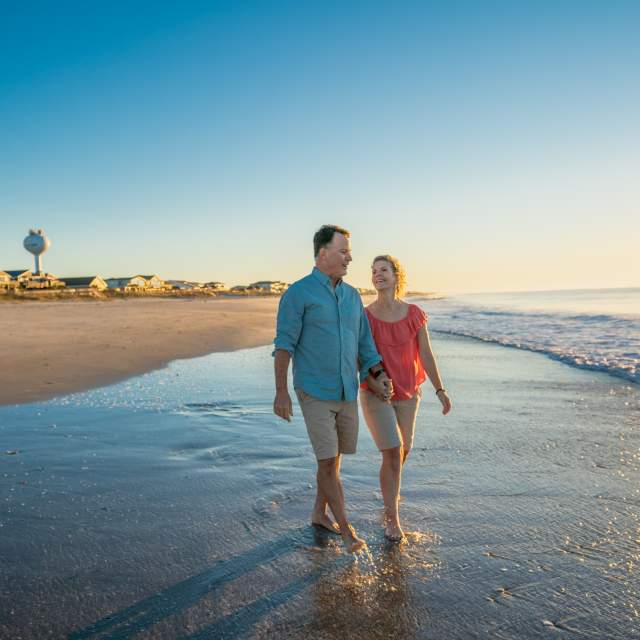
In addition to mild winter temperatures, NC’s Brunswick Islands is home to 45 miles of beautiful beaches sure to favor every kind of shell hunter. Keep reading for all you need to know about where to go, what to bring, and how to go in search of some seashells.
Where to Go Beachcombing
Here’s an island-by-island breakdown on where to go shelling during the winter months in NC’s Brunswick Islands.
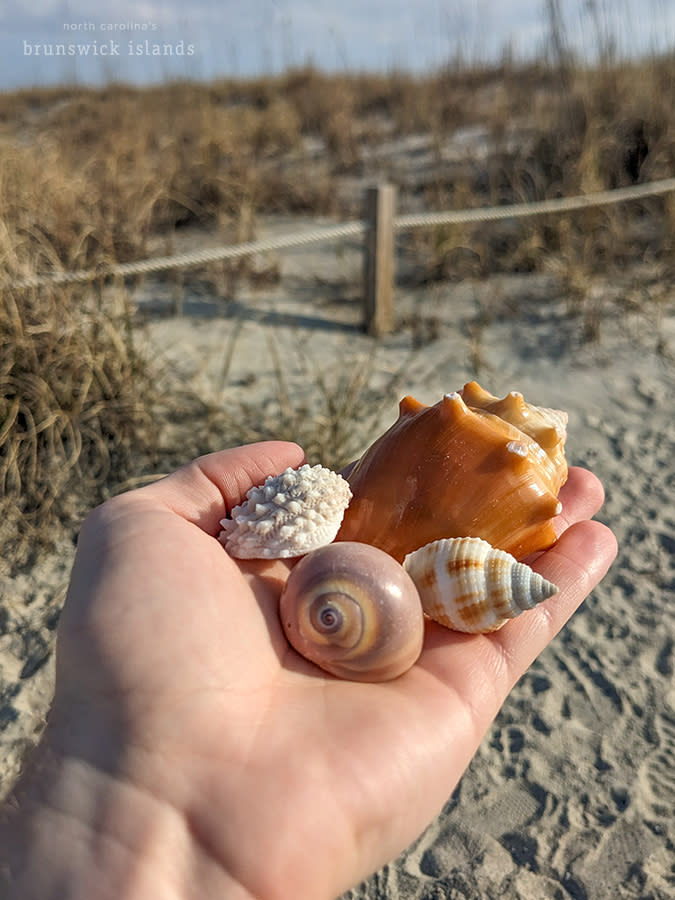
Pictured: A spiny jewel box, moon snail shell, nutmeg, and Florida fighting conch
Oak Island and Caswell Beach
Recent and ongoing beach renourishment projects have turned the beaches of Oak Island and Caswell Beach into a shell hunter’s paradise. The island’s west end, known as “The Point,” has been a go to shell hunting spot for larger finds, but this winter almost any spot along either Oak Island or Caswell Beach is fruitful.
Look out for Florida fighting conchs, scotch bonnets, nutmegs, olives, spiny jewel boxes, and even helmet shells.
Please note that as of January 2026, both beach nourishment projects are ongoing. Visitors to Oak Island and Caswell Beach are asked to respect the closed staging and project areas of working crews. For updates on project progress and areas of the beach to avoid, please visit the Town of Oak Island’s website and the Town of Caswell Beach’s website.
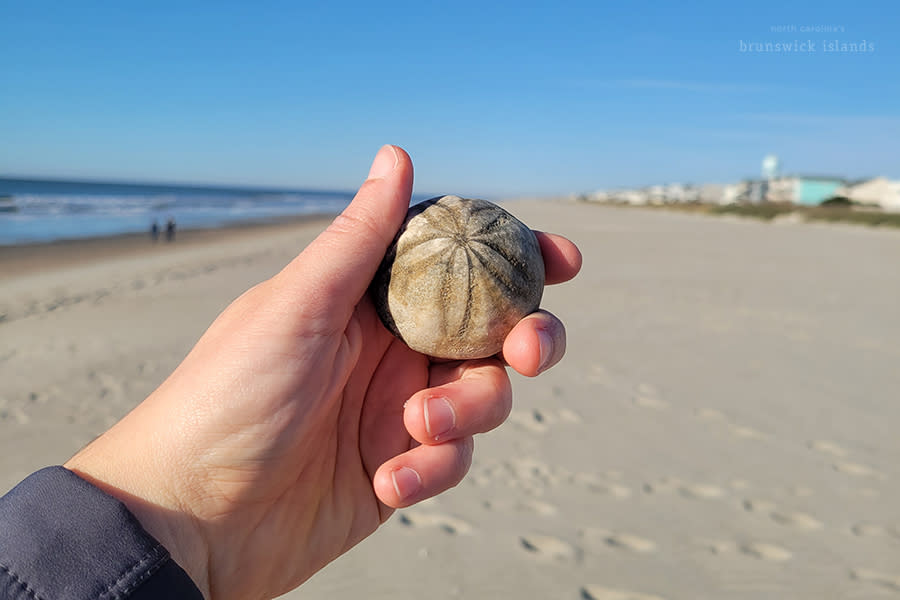
Pictured: A sea biscuit found on Holden Beach
Holden Beach
Holden Beach is a long-time favorite spot for shell hunters visiting NC’s Brunswick Islands. The island is one of the few places you can find sea biscuits. Not to be mistaken for food, sea biscuits are fossilized shells that resemble thick domed sand dollars estimated to be over 30 million years old!
Favorite shelling spots on Holden Beach include the east end of the island, near the Lockwood Folly inlet, and areas east and west of the pier.
Look out for olive shells, auger shells, whelks, calico scallops, sea biscuits, and even sharks’ teeth.
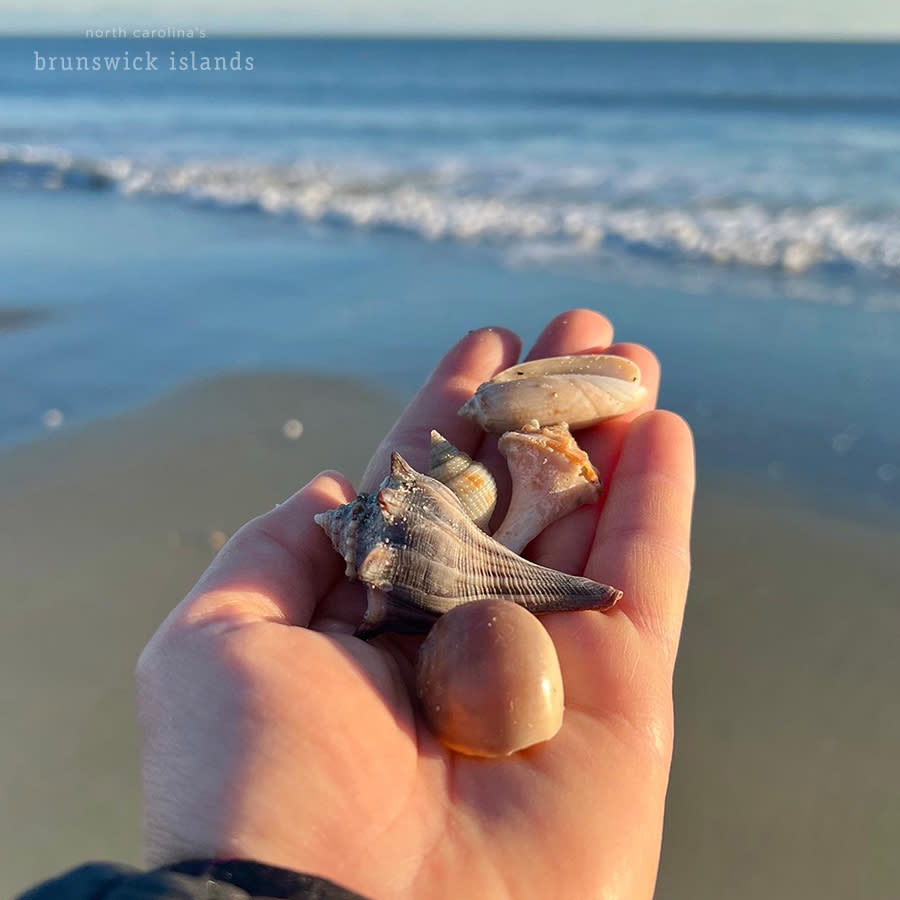
Pictured: A moon snail shell, a knobbed whelk, nutmeg, lightning whelk, and olive shell
Ocean Isle Beach
The tide reveals some impressive treasures daily on Ocean Isle Beach. One of the most popular shelling spots is the island’s east end.
Look out for large whelks, conchs, olives, and moon snail shells.
Sunset Beach
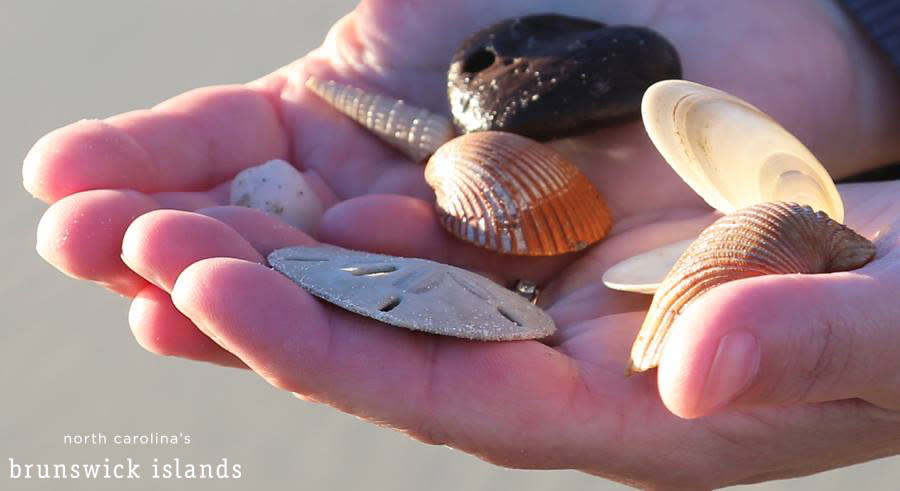
The flat and expansive shoreline of Sunset Beach is the premiere place to find sand dollars, coquina clams, baby’s ear, and even the occasional knobbed whelk. The island’s west end and neighboring Bird Island are a favored place for shellers.
Bald Head Island
Bald Head Island is another sand dollar hunter’s haven. The island’s south and east beaches are especially popular for shell hunters. Make sure to look out for scotch bonnets, starfish, and olive shells.
The Best Times to Go Shelling
The best time to go shelling in the winter is approximately one hour before and after peak low tide. The receding tide often uncovers treasures that are otherwise hidden throughout the day. For help planning the timing of your shell hunting trip, make sure to visit our Tide Chart page.
Shelling is also often at its best a day or two after a recent storm or rain event. The churned-up ocean floor is once again settled, and the tide brings new and previously buried shells to shore.
Beachcombing and Shelling Techniques
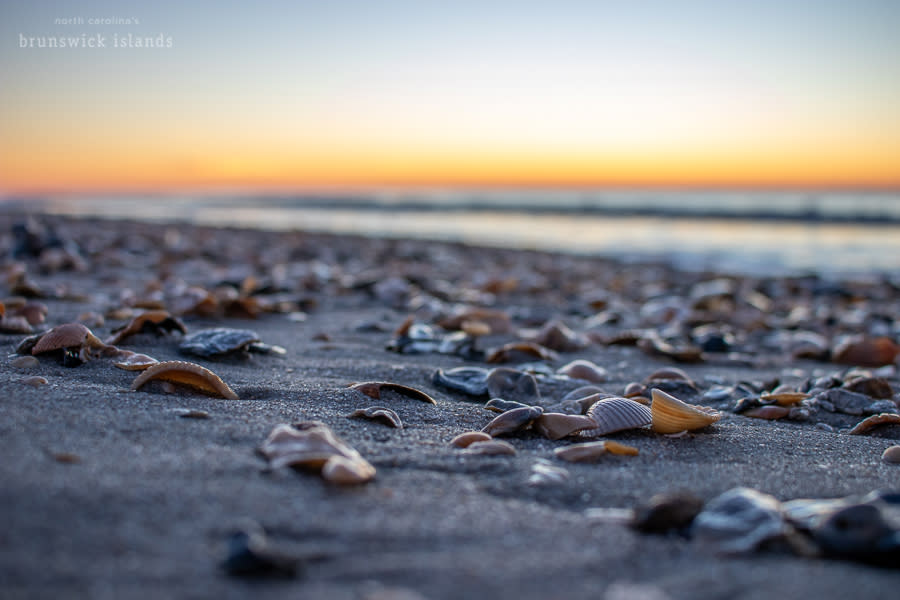
Shelling techniques vary, but each one promises an opportunity to find a variety of different kinds of shells. The most popular technique is to walk the beach, paying special attention to areas around the high and low tide lines. Shelling this way means shells are quick to spot and easier to pick up. Often sand dollars, sea biscuits, and common cockles are easiest to find this way.
Shell hunters who aren’t afraid to get wet also often venture a couple of inches into the water and use tools to sift the ocean floor for slightly buried shells.
Finally, experienced shell hunters know how to read the beach in search of heavy shell beds. To try their technique, stand facing the sand dunes and scan the horizon for darker sands and areas of shells in high concentrations.
After a winter storm, it also isn’t uncommon to see steep sand shelves formed on the beach. These are good hunting grounds for serious shellers. Digging just a few inches into these sandy shelves can uncover a bounty of buried treasures. Just remember to fill in any holes before leaving the beach.
What to Bring
Here is a short list of helpful items to bring with you on your next winter shelling adventure.
- A mesh bag or bucket
- A small shovel or 3 prong cultivator
- A small towel for hands
- Waterproof boots to wade through the surf
- A hat or scarf to keep out wind
Other Tips
- The best shells are often found around low tide. Check the daily tide schedule for the best time to go out.
- Get to the beach early for the first pick of the day’s shells.
- Keep an eye out for shells with living creatures inside, or sand dollars which may still be alive. They appear “furry” and dark in color. Please do not remove live creatures from their homes or the beach.
For more shelling tips, particularly in summer months, visit our "Shelling Tips for North Carolina’s Brunswick Islands Visitors" blog.
FAQ’s
1. When is the best time of day to go shelling?
The best time of day to go shelling is roughly one hour before and after peak low tide. New shells often reveal themselves as the tide recedes. Visit our Tide Chart for daily tide forecasts.
2. Which Brunswick Islands beaches are the easiest for beginners?
Holden Beach, Caswell Beach, and Oak Island are the best beaches for novice shell hunters thanks to their easily accessible and plentiful winter shell beds.
For more information on shelling hot spots on each of these beaches, visit the “Where to Go Beachcombing” section above.
3. What should I bring shelling?
Some helpful items to bring shelling include a mesh bag to collect shells, a small shovel, and waterproof boots. For more information on other helpful items visit the “What to Bring Section” above.
4. Can I keep what I find?
Yes, you can keep the shells that you find on Brunswick Islands beaches. However, please be mindful not to take shells with live creatures inside and do not force creatures from their homes. Please avoid removing live sand dollars and starfish from the beach.
Live sand dollars are fuzzy and brown in color. Live starfish appear plump, vivid in color, and move when placed in saltwater. If you come across any live sand dollars or starfish, please carefully return them to the ocean.
5. Is shelling good after a storm?
Shelling is best after a storm or low pressure front thanks to the recent churning of waters near the ocean floor. Visit the beach in the days following a storm for a greater chance of coming across larger shell beds.
Let’s Go Shelling
The perfect treasure is out there waiting for you! Start planning your visit to NC’s Brunswick Islands this winter and see why every season is beach season.
For more information about planning your stay, including requesting a visitor’s guide, please visit www.ncbrunswick.com.