


One of the first things players learn in pickleball is that the third shot is unlike any other shot in the game; and it’s one of the most important.
Why? Because after the serve and return, the returning team should already be at the non-volley zone (aka, the kitchen) while the serving team is still back at the baseline. That means the serving team is at a disadvantage. Charging forward behind a hard drive usually gives the opponents an easy volley, keeping you pinned at the baseline or worse, stuck in the transition zone faced with a hard ball at your feet. To level the playing field, players need a shot that buys you time to move forward and helps you earn your way to the kitchen.
That's where the third-shot drop and third-shot drip come in.
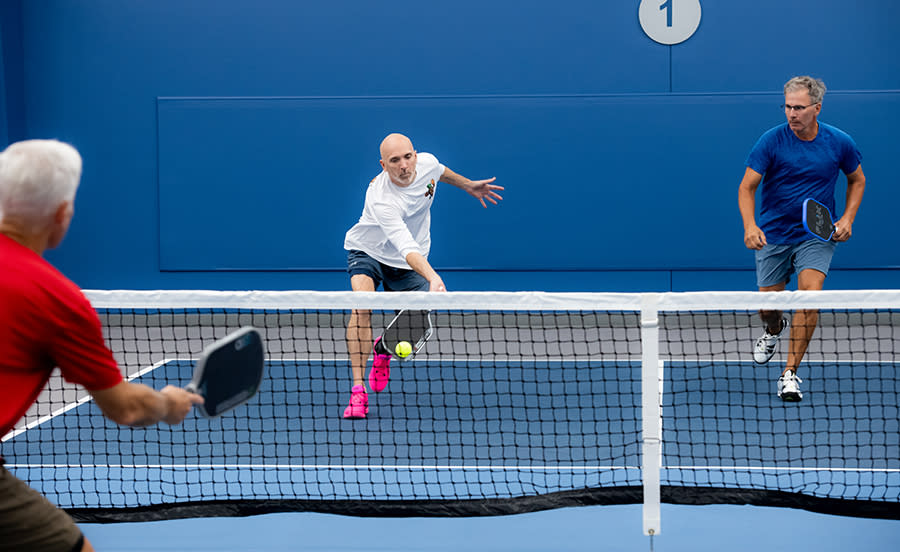
Photo Courtesy: House of Pickleball in Leland, NC.
The Third-Shot Drop
The third-shot drop is a soft shot that arcs over the net and lands in your opponents' kitchen. The goal isn't to hit a winner—it's to force your opponents to hit up on the ball rather than down at your feet.
A successful drop gives you and your partner time to move from the baseline to the non-volley zone, where pickleball points are most often won. It slows the game down, neutralizes your opponents' advantage, and allows you to establish equal court position. The key to a good drop is to ensure your ball is descending when it crosses over the net.
The drip has become increasingly popular at every level of pickleball because it blends the best qualities of a drive and a drop. A drip starts with a controlled, lower trajectory shot that carries a little more pace than a traditional drop but still finishes softly enough to prevent your opponents from attacking. Rather than trying to overpower your opponents, the drip is designed to create a difficult contact point, often forcing a blocked volley or a pop-up that allows you to continue advancing.
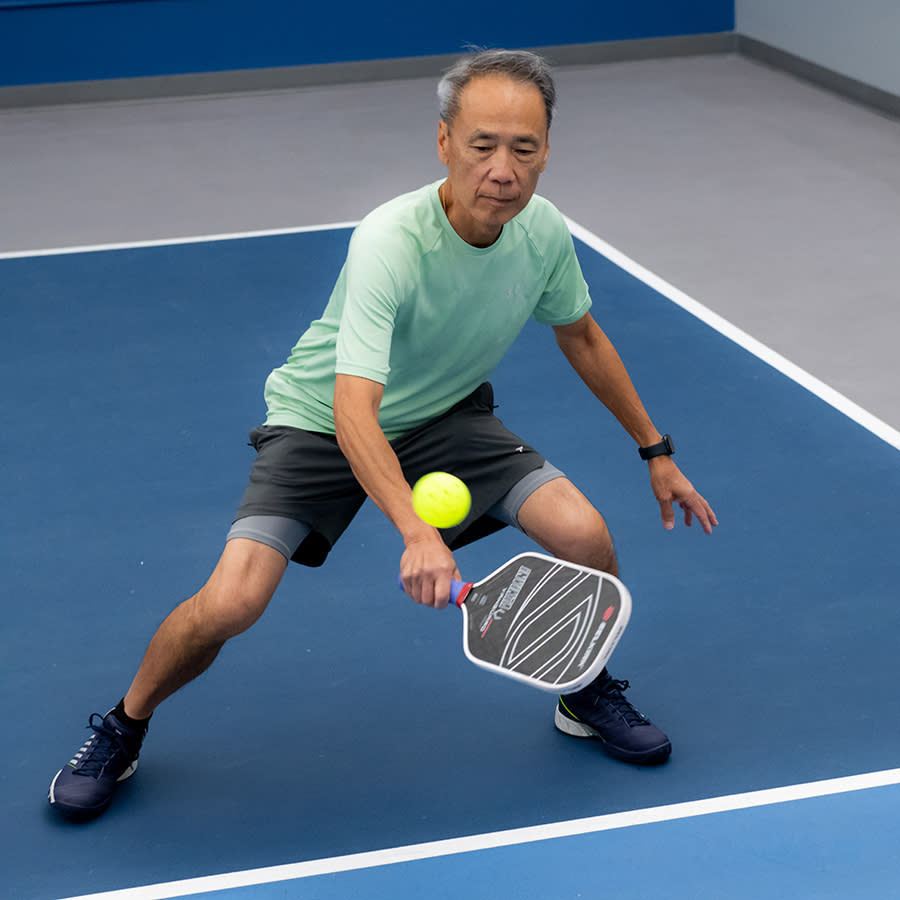
Photo Courtesy: House of Pickleball in Leland, NC.
When Should You Use Each Shot?
Both shots have an important place in your game, and the best players know when to use each one.
If you're receiving a deep return and are hitting from well behind the baseline, the classic third-shot drop is often your best choice. Its higher arc and softer landing help neutralize the point and give you time to advance.
If the return is shorter or you have the opportunity to strike the ball more comfortably, the drip can be an excellent option. It applies pressure without sacrificing control and often creates opportunities to attack the next ball.
The key is understanding that neither shot is about hitting a winner. They're transition shots designed to help you move from defense to offense and earn your position at the kitchen.
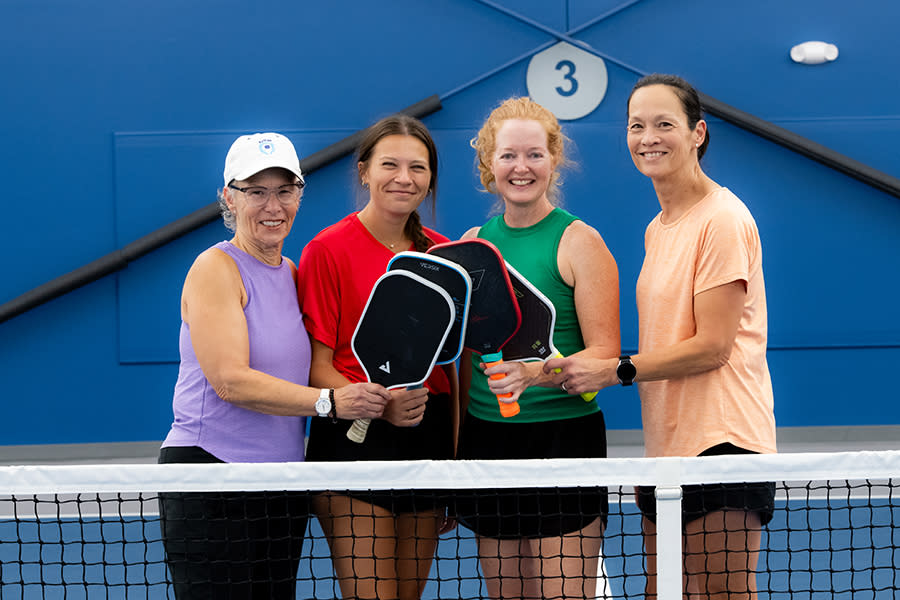
Photo Courtesy: House of Pickleball in Leland, NC.
Go Play: Practice Makes Progress
Like every skill in pickleball, mastering the third-shot drop and drip takes practice. The good news is that players of every level can learn these shots with the right instruction and plenty of repetitions.
At House of Pickleball in Leland, we spend a great deal of time helping players understand not only how to execute these shots, but when to choose them during real match play. Learning proper technique, footwork, timing, and shot selection can dramatically improve your consistency and confidence.
If you'd like to develop a dependable third-shot drop, add an effective drip to your game, or simply fine-tune your existing skills, consider scheduling a lesson with one of our coaches at the HOP. We'd love to help you build the tools that will elevate your game!
You can also find outdoor pickleball courts and open play groups to practice with across the Brunswick Islands. Check out the “Where to Play Pickleball in North Carolina’s Brunswick Islands” blog for places and games to play in the area.
Blog banner photo courtesy of House of Pickleball in Leland, NC.